
The Viral TikTok Fear: How to Set Maid Social Media Rules in Malaysia Without Losing Trust
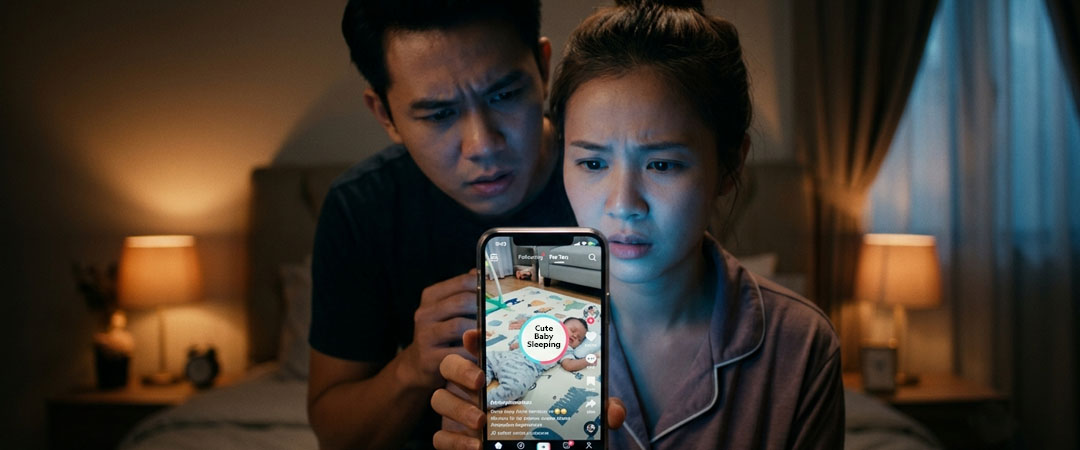
The glow of the smartphone screen illuminated the dark bedroom, casting a harsh blue light over Adam and Amy’s faces.
On the screen, a trending video played on loop—a energetic dance trend filmed right in their Puchong living room. There was two-month-old Aiden, fast asleep on the playmat in the background, while Siti pointed at animated text bubbles overlaying his face.
Amy’s thumb hovered over the screen, her heart hammering against her ribs. For young corporate parents, establishing clear maid social media rules malaysia households can rely on isn’t about control — it’s about privacy, child safety, and drawn boundaries. But looking at her sleeping son on a public, viral feed, Amy felt a surge of pure panic.
“How many views does that have?” Adam whispered, leaning over her shoulder, his jaw tight.
“Over eighty eight thousand,” Amy said, her voice cracking. “Adam, our living room is public. Aiden is public.”
“Look at Tier 1,” he pointed out. “This is non-negotiable. You sit down with Siti, show her the video, and explain why it scares you. Don’t frame it as punishment. Frame it as household security.”
Maid Social Media Rules Malaysia: Balancing Privacy and Trust
By 10:30 AM the next morning, the iced coffees sat untouched on the kitchen table. The atmosphere in the house was thick with unspoken tension.
“The instinct right now is to march in, demand her phone, and issue a blanket ban,” their agency consultant said softly, taking a seat opposite them. “And I promise you, if you do that, you will destroy the trust you built over the housework schedule.”
“She posted our child on the internet!” Adam said, pacing near the counter. “That’s a safety hazard.”
“It is,” he agreed, calm and steady. “And you have every right to set firm boundaries. But let’s look at why this happens. Most domestic helpers don’t post out of malice or negligence—they post because social media is their only connection to home, and they genuinely find your baby cute. They don’t understand digital footprints or geotagging risks.”
He opened a blank sheet of paper and drew three clear columns.
The 3-Tier Social Media and Smartphone Boundary Framework
Tier 1: Zero Tolerance (Safety & Privacy)
- The Rule: No posting photos, videos, or audio of the employer’s children, home interior, or location online.
- The Reason: Protects the child’s digital identity and prevents home security risks.
Tier 2: Working Hours Policy (Duty & Focus)
- The Rule: Personal phone usage is restricted during active care hours (feeding, bathing, outdoor play).
- The Reason: Ensures complete focus on infant safety during critical moments.
Tier 3: Off-Duty Autonomy (Respect & Connection)
- The Rule: Unrestricted phone usage during personal rest hours and designated days off.
- The Reason: Respects her personal life and keeps her connected with her family back home.
“Look at Tier 1,” he pointed out. “This is non-negotiable. You sit down with Siti, show her the video, and explain why it scares you. Don’t frame it as punishment. Frame it as household security.”
Turning Confrontation into a Clear House Rule
That evening, after Aiden was down for his night nap, Adam and Amy called Siti to the dining table.
Amy pulled up the video on her phone and gently turned it toward Siti. Siti’s eyes widened, her hands clasping together as her face flushed with anxiety.
“I am so sorry, Ma’am,” Siti stammered quickly, her voice trembling. “I… I just think Aiden is so cute. I wanted to show my family…”
“Siti, we know you love Aiden and take great care of him,” Amy said gently, placing a hand over hers. “We aren’t angry, but we are scared. When videos go viral, strangers can see where we live and what our baby looks like. In Malaysia, we have strict rules to protect our family’s privacy.”
Adam slid a printed, simple one-page agreement across the table — written in plain language with visual icons.
“You can use your phone during rest hours to call your family,” Adam explained softly. “But Aiden and our home cannot be on TikTok, Facebook, or any public app. Can we agree on this?”
Siti looked at the page, a visible wave of relief washing over her shoulders. “Yes, Sir. I will delete the video right now.”
With the video deleted and the contract signed, the heavy cloud over the living room finally dissipated. Siti headed back to her room to call her daughter, leaving Adam and Amy alone in the quiet kitchen.
Amy leaned her head on Adam’s shoulder as they watched the baby monitor. Aiden was sound asleep, arms spread wide on his mattress.
“One issue down,” Adam smiled, taking a slow sip of his tea. “We might actually get this parenting thing under control.”
Amy nodded, her eyes drifting toward the dining area. On the side table lay Siti’s agency binder, open to a checklist page titled Medical & Emergency Protocols.
Her eyes caught a highlighted section near the bottom: Mandatory Medical Renewals & Outpatient Expenses.
Amy’s smile faltered slightly as she recalled the minor cough Siti had been trying to hide for the past two days.
The Moral of the Story:
Privacy boundaries are not about restricting freedom; they are about protecting peace of mind. Your helper needs connection to her world, but your child deserves security in theirs. Set your digital boundaries early, explain the ‘why’ with empathy, and write it into your house rules from day one.
Frequently Asked Questions (FAQ)
1. Is it illegal for a helper to post photos or videos of my child online in Malaysia?
Yes. Under Malaysia’s Child Act 2001 (Section 15), sharing images or media that expose the identity or personal details of a minor without explicit parental consent is unlawful. Additionally, public posts showing the interior of your home or geotagged locations pose direct safety and security risks to your household.
2. What should I do if I catch my helper going live or posting on TikTok while watching my baby?
Address the issue immediately, but remain calm and non-confrontational. Explain that your concern is entirely about safety and privacy — not punishing her. Ask her to delete the specific video or post, and review your household’s phone policy together so she understands that active childcare hours require 100% focused attention without screen distractions.
3. Can I completely ban my domestic helper from using a smartphone?
While you cannot legally or ethically take away her phone during her personal off-duty hours, you have full authority to restrict personal phone use during active working hours and prohibit any filming or photographing inside your home. A balanced policy allows her to stay connected with her family during breaks while keeping your home and children completely off social media.